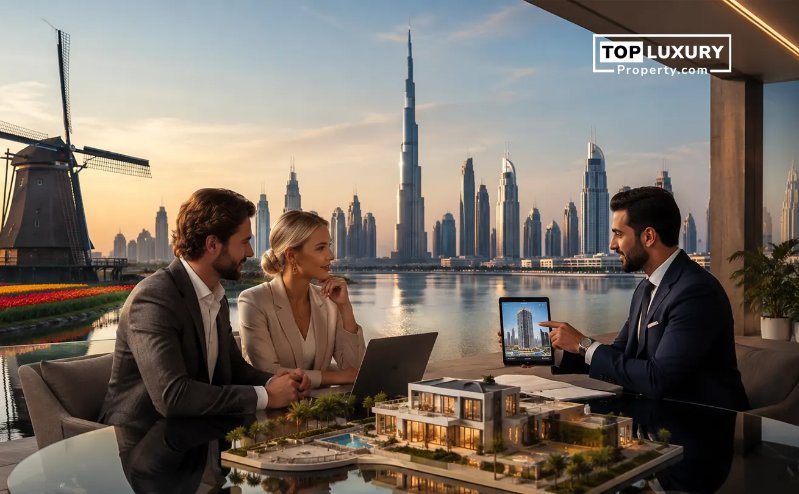
The rules of wealth building in the Netherlands have fundamentally changed. If you hold domestic property, you already know the reality. Transfer taxes are huge. The Wet betaalbare huur has severely capped your income potential on mid-segment homes. Meanwhile, the Box 3 wealth tax continues to target your net worth. That’s why many Dutch investors are looking outside of their home country. Some want better returns, some want a better lifestyle, and some want better security.
If we analyze all parameters, then Dubai tops among them. But the real question is how to invest in Dubai real estate from the Netherlands? The process is very simple. When investing in Dubai as a foreigner, you need to maintain some proper steps.
Let’s see each step to invest in Dubai.
Why Dutch Citizens Are Investing in Dubai Real Estate
Dutch buyers' inflows are not a seasonal trend; it is a calculated strategy. When you hold real estate in Amsterdam, Rotterdam, or Utrecht, your net rental yields are continuously compressed by maintenance, municipal taxes, and tenant problems.
Investing in Dubai solves all problems. The UAE operates a financial system that attracts Dutch investors. Dubai offers:
-
0% personal income tax
-
0% capital gains tax
-
0% annual property tax
-
High gross rental yields
-
100% Freehold ownership
-
High capital appreciations
-
Easy business setup
-
Strict and transparent laws
-
10-year Golden Visa facility
Along with these benefits, the UAE Dirham is pegged to the US Dollar. When you purchase a property in Dubai, you can take advantage of a direct currency hedge against Eurozone inflation. The combination of zero taxes, high cash flow, and currency stability is exactly why Dutch investors are consistently investing in Dubai real estate.
Can Dutch Citizens Own Property in Dubai?
Yes. Buying property in Dubai as a foreigner is legally possible.
Before 2002, foreign ownership was restricted. However, Sheikh Mohammed bin Rashid Al Maktoum government published a decree and designated “Freehold Zones” in Dubai where any non-UAE investors can buy, sell, and lease their property. This decision was also formalized in Law No 7, 2006, expanding the designated areas for foreigners. Currently, Dubai has 70 freehold areas.
By investing in Dubai freehold areas, you receive a permanent Title Deed directly from the government. You own physical property there. You have the freedom to sell it, live it, or pass it to your next generations.
With recent popularity and growth demand, as a first-time investor, you can choose any freehold area for your property investment in Dubai.
-
Downtown Dubai
-
Business Bay
-
Dubai Creek Harbour
-
Emaar South
-
Jumeirah Village Circle
-
Dubai Marina
-
The Valley
-
Damac Island
-
Downtown Jebel Ali
-
Palm Jumeirah
Step-by-Step Process to Buy Property in Dubai from the Netherlands
Before any investment, you need a clear road map. The property buying process in UAE is highly digitized, fast, and transparent. Here is the exact step-by-step process to buy a property in Dubai from the Netherlands.
For Off-plan Properties:
An offplan property investment means you are purchasing a unit directly from master developers like Emaar, Sobha, and Damac before the construction is finished. Buying an off-plan property, you can secure the unit at the lowest possible launch price, exclusive discounts, and installment payment facilities.
Apply for an EOI
Premium projects sell out in hours. To secure a unit, you submit an EOI. This is a small refundable deposit usually between AED 20000 and AED 50000. During EOI submission, you also need to submit your Dutch passport copy. This reserves your spot in that project.
Pay the necessary fees
Once you select your exact floor plan, you wire the down payment. This is typically 10% to 20% of the total purchase price. Simultaneously, you must pay 4% registration fees to the Dubai Land Department.
Receive and sign the SPA
The developer issues the SPA. This is your legal contract. Read it carefully. Look specifically for the “Anticipated Completion Date” and the “Permitted Delay period”. You can sign this document digitally from the Netherlands.
Receive the Oqood
This is a crucial step in buying property in Dubai. After the SPA is signed, the developer releases the Oqood document. It is a temporary title deed. The government issues this certificate to register your asset on the official ledger while the project is still under construction, preventing the developer from double-selling the unit.
Pay for the property in installments
Never pay your installment payments directly to the developer’s private bank account. By law, you must wire funds into a government-regulated Escrow account. The developer can access these payments when independent government engineers physically verify that the construction milestones have been reached.
Receive the title deed
When construction finishes, the building receives a Completion Certificate. You conduct a “snagging” inspection to check for defects. Once satisfied, you pay the final balance. The DLD instantly issues your permanent electronic Title Deed.
Timeline to complete an off-plan property: Booking takes 7 to 14 days. Construction takes 2 to 4 years.
For Ready Properties:
If you want immediate cash flow, you buy a ready property on the secondary market. You can rent out the property the very next day. Here is how you can buy a ready-to-move property in Dubai.
Select your property
Work with a RERA registered real estate broker. Do not buy based on glossy photos. Ask your broker to give the official history of the property to verify recent sales prices and historical rental yields.
Make an offer
Discuss with your broker. They will negotiate the final price, the timeline, payment modes and whether the property is vacant or with an existing tenant.
Sign Form F (MOU)
You and your seller sign an MOU or Form F via the government official REST app. You pay a 10% security deposit cheque. Your broker holds the cheque in custody. It is only cashed as a penalty if you illegally back out of the contract.
Obtain NOC
The seller applies for an NOC from the master developer. This document proves the seller has paid all community service charges and utility bills. Obtain this certificate. You will never inherit a previous owner’s debt.
Transfer ownership
Both parties meet at a DLD-approved Registration Trustee Office. If you are in the Netherlands or you are not available on transfer days, you can simply grant your broker a notarized and apostilled power of attorney to attend on your behalf. You pay the final price amount via a highly secure manager’s Cheque.
Receive Title Deed
The trustee executes the transfer in the government database. Your new Title Deed is emailed to you instantly.
Timeline to complete a ready property: The entire secondary market transfer takes 30 to 45 days.
Financing and Mortgages for Buyers in the Netherlands
You do not need millions of Euros in liquid cash to buy property in Dubai. Using a bank mortgage, you can start your investment.
Can Non-Residents Get a Mortgage in Dubai?
Yes. UAE banks (like Emirates NBD, FAB, and Mashreq) actively lend to Dutch Citizens living in the Netherlands. As a non-resident, you can borrow up to 50% to 65% of the property price. Interest rates are competitive and 3 to 5 years fixed rates, after that, it converts into a variable rate linked to EIBOR.
Required Documentation and Eligibility Criteria for Dutch Nationals
UAE banks require a clean, highly transparent document for a mortgage application. To secure a pre-approval, you must provide:
-
A copy of your Dutch passport
-
Last 6 months of Dutch bank account statements
-
If employed, provide your last 6 months' salary slips and jaaropgaaf.
-
If you are a ZZP or business owner, provide two years of audited financial statements, KVK registrations, and company bank statements.
-
A BKR-registratie copy
-
An address proof.
Budgeting for Dubai Property Buying
Never look solely at the property price. You must calculate your closing upfront cost. Always use a DLD fees calculator to find the final price. Always budget an additional 6% to 7% over the purchase price.
|
Ready Properties |
Off-plan Properties |
|
DLD Fee: 4% of property value Real Estate Brokerage Commission: 2.0% + 5% VAT DLD Trustee Office Fee: AED 4,000 for above AED 500,000 + VAT or AED 2000 for below AED 500,000. DLD Admin Fee: AED 580 NOC: AED 500 to AED 5000 Property valuation fee: AED 2500 to AED 3500 + VAT Mortgage Registration (if financed): 2.5% of the loan value + AED 2,90 Bank Valuation Fee. |
DLD Registration Fee: 4% Agency Fees: 2% DLD Admin Fee: AED 40 Developer Administration Fee: AED 5,000 |
Exploring Post-Handover Payment Plans
Some off-plan developers offer highly popular options called post-handover payment plans. For example, you pay 50% of the property value during the construction phase. The rest 50% is payable in small installments in 3 to 5 years after handover. You can rent the property and use the rent to pay the installments. This is very beneficial as it allows the building to pay for itself.
Key Considerations for Dutch and International Investors
Buying an international property is one side of the coin, and maintaining all revenues and income from it is another side of the coin. After property buying, you need to adhere to your domestic and UAE tax laws.
Tax and Wealth Protection via SPVs
You can purchase the property in your personal name, or you can establish a special purpose vehicle (SPV). An SPV is a corporate entity set up in a UAE Free Zone.
Buying through an SPV protects your privacy, separates our personal liability, and makes transferring ownership shares to business partners or family members highly efficient. The best approach involves using specialized investment companies in Dubai to manage this corporate setup. However, you must verify exactly how this corporate structure affects your Dutch Box 3 declarations, as the Belastingdienst has strict reporting rules for foreign corporate entities. Always consult your Dutch tax advisor.
Individual and Joint Ownership
You can buy property as a sole owner or jointly with a spouse. If you are married in the Netherlands under the community of property (gemeenschap van goederen), you must decide early how you want the ownership percentages recorded on the Dubai title deed. The Dubai Land Department registers exact, unchangeable percentages. Clarifying this immediately prevents structural disputes during divorce or succession.
Inheritance and Wills for Non-Muslim Clients
This is the most vital step. By default, unmanaged UAE real estate can fail under local Sharia succession laws if the owner passes away. This can freeze your assets and distribute them according to local formulas.
This is particularly important for Dutch investors: the Netherlands applies its own aufrecht (succession law), and Dutch inheritance and gift tax (schenk- en erfbelasting) may apply to the worldwide estate of Dutch tax residents, including Dubai property. To manage all, you can register an inheritance Will with DIFC Will Service. This will specify how their Dubai assets should be distributed. The interaction between Dutch succession law, EU Succession Regulation (Brussels IV / Regulation 650/2012), and a DIFC will be carefully reviewed with a cross-border estate planning specialist.
Consult with a will specialist to know all the process.
How to Pay Dubai Property Price from the Netherlands?
Paying for your property is simple. You can transfer the payment via International SWIFT system directly from your Dutch Bank to the Dubai government's escrow account or registration trustee.
As Dutch banks strictly enforce Weft regulations, they will flag large transfers leaving the SEPA zone. Give your Dutch bank manager your signed SPA or MOU contact before initiating the wire. This proves the legitimate source and purpose of funds, allowing the transfer to clear in 24 to 48 hours.
Top Property Types for Dutch Buyers
Where to invest in Dubai real estate based strictly on your financial goals.
If your goal is high, passive rental income, a Dubai apartment investment is the correct path. Look at the studios and one-bedroom apartments in high-density, tourist-heavy locations. Dubai Marina, JBR, Downtown Dubai, and Business Bay offer immense liquidity. These units rent quickly to young professional expatriates and perform exceptionally well on short term holiday platform Airbnb. The smaller the unit, the higher the percentage yield.
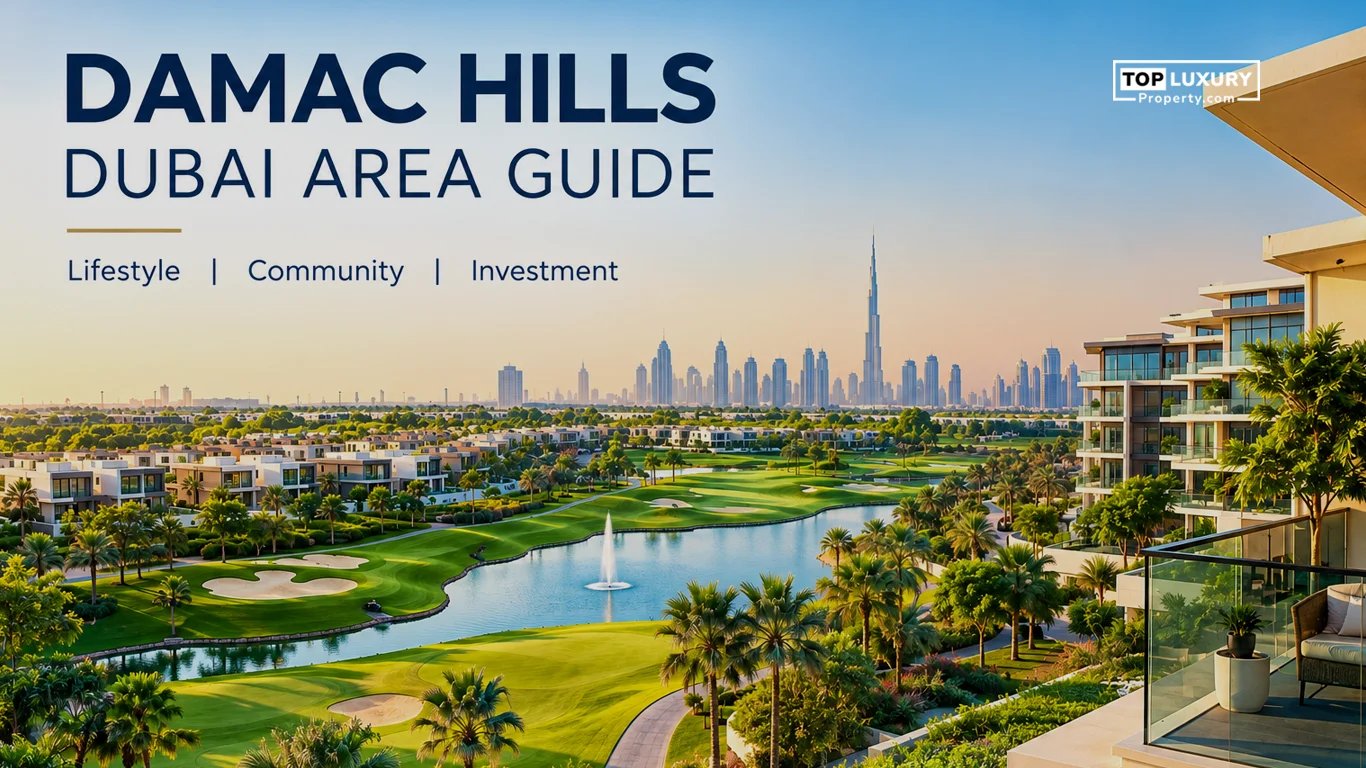
If your goal is long-term capital appreciation and wealth preservation, focus on townhouses and villas. Master planned communities, Arabian Ranches, Damac Hills, The Valley, Emaar South, and Dubai Hills Estate offer large living spaces, green parks, golf courses, and elite international schools. Prices are constantly going upwards, as per data from 2014 to till date, there is a massive 206% price growth, which suits for long-term investments.
Insider Tips for a Seamless International Transaction
Don’t execute cross border transactions blindly. Do proper fact-checks before any investment.
Verify the License: Work with only RERA-registered real estate agents. This guarantees they are legally bound to the government. Check their official RERA BRN.
Manage Currency Risk: Follow the EUR/AED currency exchange rate. Use a dedicated foreign exchange broker rather than your retail bank. FX brokers offer institutional exchange rates and lower spread fees, saving you thousands of Euros.
Hire Property Management: If you rent out your property, then it is best to hire a property management company in Dubai. For 8% to 10% annual fees, they will source vetted tenants, collect rent, handle emergency maintenance calls, and deposit net income directly to your bank account.
Developer Track record: Focus on historical data. If buying off-plan property, check the developer’s track record. Have they delivered past projects on time? What is the quality of their facility management post-handover?
Passive Alternatives: If you want exposure to the Dubai real estate but do not want to manage physical property, consider REIT Dubai. A real estate investment trust allows you to buy highly liquid shares in a professionally managed portfolio of residential and commercial buildings. You collect dividends without dealing with a tenant.
Follow these tips to secure the best real estate investment in Dubai. Do not buy based on brochures; buy based on data and infrastructure.
Conclusion
As a Dutch investor, if you are planning to buy property in Dubai, then you have to follow these steps. Dubai offers the most structured, transparent, and digital process. All you have to do is maintain proper paperwork, follow the tax rules, and make a clear disclosure of the inheritance will.
By investing in Dubai, you experience all the benefits an emirate local has. Zero property tax, zero capital gain tax, and easy business setup. The most interesting benefit of investing in Dubai is the 10 year Golden Visa, where you can sponsor your family with any local sponsorship.
To take all these advantages, you have to step forward. You need a RERA-registered real estate partner. Top Luxury Property helps you start to finish, from property selection to final handover.
So, explore the latest projects in Dubai from here. Secure a unit and start your investment journey.