Will Property Prices Fall in Dubai in 2026 Amid Recent War?
Quick Summary
- Prices unlikely to fall significantly
- Market stabilising after record-breaking growth
- Demand remains strong backed by population inflow, foreign investors
- Supply surge may slow growth but will not trigger a crash
| Factor | Impact |
|---|---|
| War impact | Short-term sentiment only |
| Demand | Strong |
| Supply | Increasing |
| Price trend | Stable growth (3–8%) |
Will Dubai Property Prices Fall in 2026?
No. Dubai property prices are not expected to fall in 2026. Most analysts forecast modest growth of 3% to 8%, not a decline.
Knight Frank projects around 3% growth in prime areas and roughly 1% in mainstream segments.
Cushman and Wakefield forecasts price appreciation moderating to 5–8%
The conflict has cooled sentiment. It has not broken the market. Every challenge creates new opportunities and new growth. If we go to history, after every problem, whether natural, financial, or man-lead, Dubai bounces back strongly.
According to market analysis by Top Luxury Property, Dubai real estate is expected to remain stable in 2026 despite geopolitical tensions.
| Year | Event | Market Impact | Growth/Change | Period |
|---|---|---|---|---|
| 2008 | Financial Crisis | Strong recovery after downturn | +35.8% average growth | 2009–2014 |
| 2019 | COVID-19 Pandemic | Rapid rebound with investor demand | +38% price increase | 2020–2022 |
| 2024 | Record Rainfall | Short-term disruption, quick stabilization | +17.3% growth | Within 9 months |
How Is the Recent War Affecting Dubai’s Property Market?
The Israel–Iran war has created uncertainty in the market. Dubai recorded AED 833.47 billion in transactions across 245,178 deals in 2025, its highest ever. The conflict hit the momentum, but temporarily.
The DFM Real Estate Index dropped 20% in five sessions after tensions escalated, wiping out all gains made in 2026. Developer shares fell sharply. However, this reflects stock market repricing, not actual home valuations.
Does Geopolitical Conflict Impact Real Estate Prices?
Yes, but slowly. Conflicts trigger caution, not instant crashes. Real estate prices take weeks or months to adjust because transactions are inherently slow.
- Buyers shift to a wait-and-watch mode
- Mid-range off-plan projects face more negotiation pressure
- High-net-worth investors with long horizons tend to stay committed
- Deal delays happen before price drops do
In fact, even amid the conflict, Dubai recorded a Dh422 million apartment sale, the third-most-expensive in the city’s history. This shows wealthy global investors still see Dubai as a safe store of wealth.
Why Real Estate Reacts Differently from Stock Markets
Stocks can fall in hours. Property cannot. Real estate is illiquid. A sale takes 30 to 90 days to close, so panic does not translate into instant price drops. In the recent tension, an estimated $43 billion in market value was at risk of being wiped out by mid-March due to the ongoing volatility.
But the real estate market is largely end-user driven. Most buyers are residents and long-term investors, not traders. This buffer explains why home prices stayed mostly flat even as the DFM index plunged.
| Feature | Stock Market (DFM) | Real Estate Market |
|---|---|---|
| Status | Bear Market (-21% from peak) | Correction Phase (10-15% projected dip) |
| Liquidity | High; investors can exit quickly, causing sharp drops | Low; sellers are largely holding prices, resulting in fewer deals |
| Sentiment | Panic selling in listed developers (e.g., Emaar) | Long-term investors still view Dubai as a safe haven |
| Primary Driver | Direct geopolitical news and oil price volatility | Buyer confidence and regional safety image |
Short-Term vs Long-Term Market Impact
Short term:
- Slower transactions
- Negotiation increases
- Investor caution
Long term:
- Strong population growth
- Wealth inflow continues
- Dubai remains a global hub
Has Dubai Real Estate Slowed Down During the Conflict?
Yes, but not collapsed. DXD preliminary Jan to Mar 2026 data shows 41,079 residential units, a 12% dip, but median prices increased 15%.
Transaction Volume Trends During Uncertainty
Before the conflict, January 2026 alone recorded over AED 10.58 billion in sales across 2,889 transactions in just the first week.
By early March, that pace had slowed. Emaar still led the market with over AED 25.7 billion in sales and 4,566 transactions in Q1. DAMAC followed with AED 10.3 billion.
The pause is real, but the demand infrastructure is still very much present.
Luxury Property Demand During Geopolitical Tension
The high-end segment has held firm. Knight Frank reported 500 deals above US$10 million in 2025, a record. Palm Jumeirah apartments jumped roughly 31% year-on-year in Q3 2025. Even during the war, a Dh422 million luxury apartment was sold. It proves that ultra-luxury demand remains active.
Are Investors Still Buying in Dubai?
Some are. Some are waiting. Domestic buyers and investors focused on ready homes. Off-plan and international buyers are more cautious. Indian investors, who account for 20–22% of all foreign purchases in Dubai, have largely moved into “wait-and-watch” mode.
We can say that buyers and investors are optimistic.
Why Dubai Property Prices Are Expected to Stay Stable
The answer is very vast.
Dubai has some special benefits that no other country can match.
Strong Foreign Investor Demand
The UAE attracted a record 9,800 relocating millionaires in 2025. Dubai offer
- Dubai’s zero property tax
- 100% foreign ownership
- Business facilities
- Open economy
In demand point of view, Off-plan demand surged 25% in Q1 2026, with the AED 2–5 million segment being the most popular.
Population Growth and Housing Demand
Around 50,000 to 60,000 new residents arrive in Dubai every year. New residents need homes. That demand does not disappear in the face of a geopolitical shock.
High Rental Yields Supporting Prices
Prime Dubai residential properties generate annual rental returns of 6%- 8%, among the highest in major global markets. High yields make owners reluctant to cut prices. The buy-to-let case for Dubai housing demand in 2026 is still strong.
| City | Avg. Gross Yield | Rental Income Tax | Price per Sq. Ft (USD) |
|---|---|---|---|
| Dubai | 6.0% – 8.0% | 0% | $438 – $550 |
| London | 2.5% – 5.0% | 20% – 45% | $950 – $1,500+ |
| New York | 2.9% – 5.0% | 30% | $880 – $1,850+ |
| Singapore | 2.0% – 3.8% | 0% – 16%* | $1,200 – $1,600+ |
| Hong Kong | 2.0% – 3.0% | 15% | $1,950 – $2,100+ |
Government Policies and Golden Visa Impact
Government policies have a major impact on Dubai’s real estate market. Golden Visas, transparent escrow protections, and a new Rental Index to build long-term investor trust. These structural reforms reduce perceived risk for international buyers.
The D33 Economic Agenda 2033, Dubai 2040 Urban masterplan, and Real estate Strategy 2033 signal institutional confidence and long-range planning that underpins the Dubai property market outlook for 2026 and beyond.
In these geopolitical tensions, Dubai’s ruler, Mohammed bin Rashid Al Maktoum, has issued Law (3) of 2026, on building quality and safety.
The Law is: Every building should be structurally sound, well-maintained, and safe to live or work in, not only at handover but throughout its lifecycle.
This step also solidifies Dubai’s status as a safe haven.
What Risks Could Cause Property Prices to Fall in 2026?
No market is immune. Here are the key risks to watch.
Oversupply of New Housing Units
Knight Frank estimates around 160,000 units could be completed in 2026. Moody’s warned of a modest price correction driven by this supply surge. Mid-market apartments in supply-heavy zones face the most pressure.
Global Economic Slowdown
A worldwide downturn could reduce foreign capital inflows. Dubai’s double-digit price gains already moderated to low single digits when global rates rose. If credit tightens further, affordability weakens.
Interest Rate and Financing Challenges
Higher borrowing costs cool mortgage-dependent buyers. Reports from early 2026 suggest that tighter lending terms are already slowing some domestic transactions. Smaller investors relying on bank financing are pulling back more than cash buyers.
Investor Sentiment During Geopolitical Tension
A prolonged conflict adds a geopolitical risk premium to UAE real estate. Analysts suggest that if the war continues through late 2026, selected segments, particularly off-plan suburban projects, could see a 10–15% correction.
Time and stability are the only cure for sentiment-driven downturns.
Which Areas in Dubai Could See Price Correction?
Not all areas behave the same. Some areas might have high transactions but can see price correction.
| Area Type | Risk Level | Reason |
|---|---|---|
| Jumeirah Village Circle, Al Furjan | Medium | Off-plan heavy, moderate rental demand |
| Dubai South, Expo City | Medium-High | New suburban, investor-led demand |
| Nad Al Sheba, new masterplans | High | Dependent on sentiment, not end-users |
| Mid-market apartments (AED 2,500+/sqft) | High | Peak-priced, renegotiation risk |
Oversupplied Mid-Market Communities
High risk locations include Jumeirah Village Circle and Al Furjan. They all have strong off-plan pipelines but weaker rental demand. Price growth in Dubai Hills was just + 1.8% in Q3 2025 before the war. Static or marginal declines are possible if sentiment remains weak.
Off-Plan Heavy Developments
Off-plan deals accounted for approximately 65-68% of transactions in Q1 2026. The most vulnerable projects are those at AED 2,500 per square foot. Developers have big capitals so forced discounts are unlikely. But buyers will go after better terms.
Emerging Suburban Locations
Dubai South, Nad Al Sheba, and Expo City all look good long term, but largely depend on investor appetite. Here, near-term sentiment shifts are felt first. Any correction here should be moderate unless global demand collapses sharply.
Which Areas Will Remain Strong Despite the War?
Luxury and Waterfront Properties
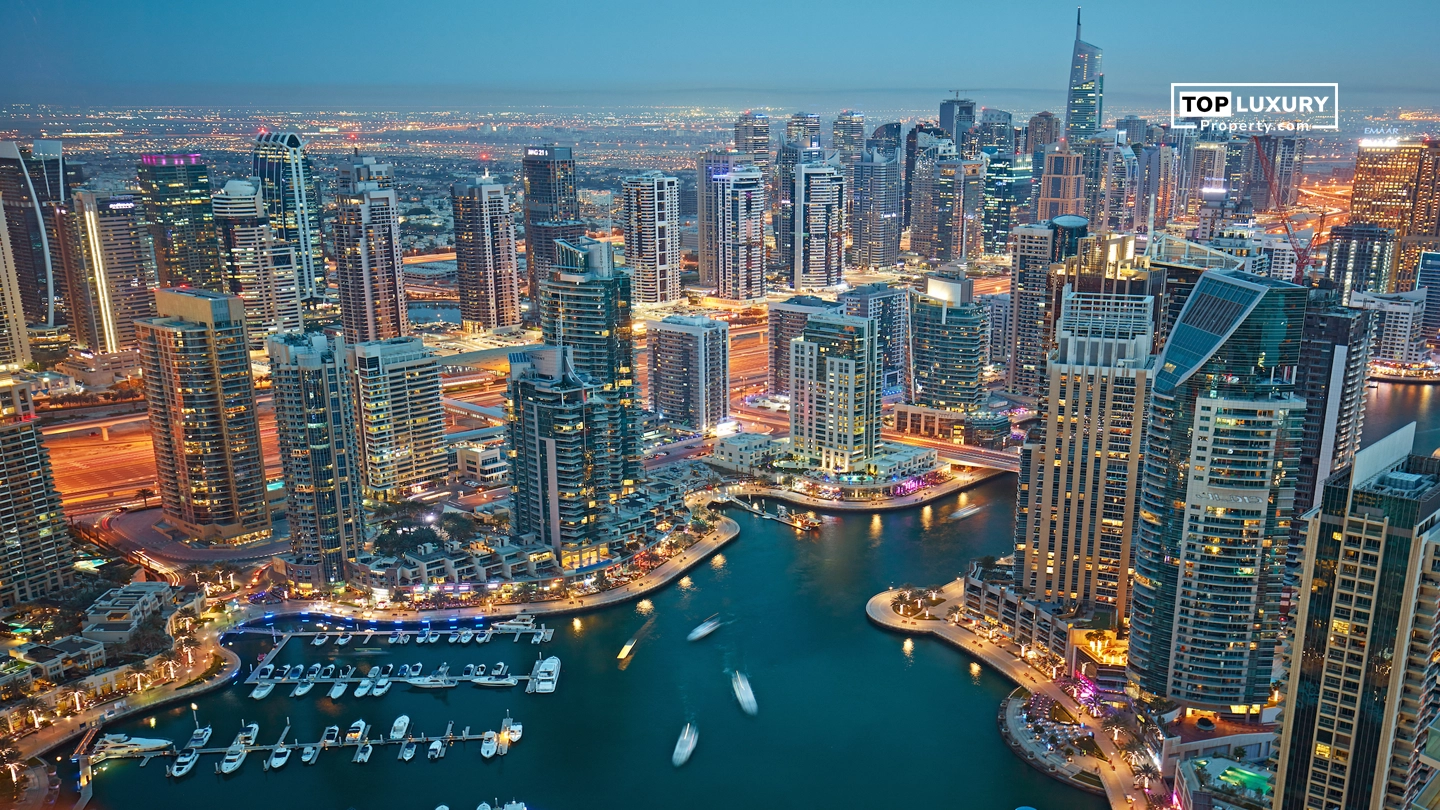
Palm Jumeirah, Downtown Dubai, Emirates Hills, and Dubai Marina remain popular with high-net-worth buyers despite regional noise. In these areas, supplies are constrained and demand is global.
Prime Locations with Limited Supply
Existing, low-inventory communities like Business Bay and Downtown Dubai do very well in uncertain times. Knight Frank calls this a “two-speed market” where prime areas outperform as mid-market growth normalises.
Branded Residences and High-End Projects
Dubai is home to branded properties. Many reputable brands, such as Bulgari, Dorchester Collection, Armani, Bugatti, and Mercedes-Benz, have projects that target ultra-wealthy buyers.
In terms of sales, branded properties have more capital appreciation and more resale value. Despite the current geo political tenstions, properties like Atlantis The Royal Residences,
Dubai Property Price Forecast for 2026
Expected Price Growth Range (3–8%)
| Source | Forecast |
|---|---|
| Knight Frank | 3% prime, 1% mainstream |
| Cushman and Wakefield Core | 5–8% across Dubai |
| Engel and Volkers | 3–8% blended growth |
| DXBInteract (Jan–Mar 2026) | Median AED/sqft up 14% YoY |
Rental Market Outlook
Rental yields remain tight. Downtown Dubai one-bed apartments average around AED 127,000 per year. Dubai Marina averages around AED 102,000. With fewer new units delivering on time, rent relief in core areas is unlikely. Buy-to-let investors can expect sustained income returns of 6–9%.
Luxury vs Mid-Market Performance
- Luxury and waterfront: Strong growth, outperforming the wider market
- Prime established areas: Moderate positive gains
- Mid-market apartments: Flat to low single-digit movement
- Off-plan suburban: Highest risk, renegotiation likely
Is Dubai Real Estate a Safe Haven During War?
Yes. Dubai has long positioned itself as the Middle East’s stable financial hub. This conflict is testing that claim, and so far, the fundamentals are holding.
Why Investors Shift Capital to Dubai
Oil contributes less than 2% of Dubai’s GDP. The economy is diversified in trade, tourism, finance, and services. Dubai has absorbed regional crises before the Arab Spring, oil shocks, and the pandemic, and each time attracted more capital than it lost. The UAE’s legal framework, transparent ownership rules, and proactive governance make it structurally different from its regional peers.
Dubai vs Other Global Markets
In 2025, Dubai’s prime home prices rose 15% while London and New York fell. That outperformance was driven by tax advantages, foreign ownership rules, and strong growth. During the current conflict, while global equity markets wobbled, Dubai’s property transaction volumes remained above year-ago levels in Q1 2026.
Wealth Migration Trends
The UAE attracted a record 9,800 millionaires relocating in 2025, the highest in the world. The Real Estate Strategy 2033 targets a comprehensive roadmap aiming to double the sector’s GDP contribution to AED 73 billion and push total market value to AED 1 trillion. This long-range policy commitment acts as a structural floor for the Dubai housing market, even during near-term turbulence.
What Are Experts Saying About Dubai Property in 2026?
Developer Confidence
“Dubai’s market has nothing to fear,” said Mohamed Alabbar, founder of Emaar Properties, addressing investors directly after the conflict escalated. He pointed to the UAE’s stable governance and its consistent track record of managing shocks. Emaar led Q1 2026 with over AED 25.7 billion in sales.
Market Stability Insights
“The structural drivers of demand in Dubai, population expansion, wealth migration and economic diversification remain firmly intact,” said Faisal Durrani, Partner and Head of Research at Knight Frank. “The Dubai residential market is transitioning into a more balanced phase following several years of exceptional growth,” added Prathyusha Gurrapu of Cushman and Wakefield Core.
Experts warn that if tensions prolong, capital flows and demand could be affected. Rice University economist Jim Krane cautions that Dubai’s image as a conflict-free haven is “in increasing doubt” the longer the war drags on.
On the other side, Ziad El Chaar, the CEO of Dar Global, said: “In this region we know things start quickly and end quickly, and we overcome this because the fundamentals across the GCC (Gulf Cooperation Council) nations are strong… “Nothing is on hold, everything is on track.”
Louis Harding, CEO of betterhomes, noted that Dubai “approaches 2026 from a foundation of real, underlying demand rather than speculative momentum.”
These are not spin statements. They are backed by record transaction data.
Long-Term Economic Vision (D33 Strategy)
The D33 Economic Agenda 2033 aims to double Dubai’s GDP within a decade. The strategy covers finance, tech, tourism, and trade — all of which drive demand for residential and commercial property. This institutional framework tells global investors that Dubai is building for the long run, not just riding a cycle.
Key Takeaways for Investors
- Dubai property prices 2026 expected to grow moderately
- War impact is short-term and sentiment-driven
- Luxury market remains strong
- Mid-market may see slower growth
- Rental yields continue to support prices
- Dubai remains a global investment hub
Final Verdict — Should You Invest in 2026?
For long-term investors, Dubai real estate remains one of the most compelling markets in the world. Tax-free income, high rental yields, population growth, and a clear government vision make it structurally resilient even during a regional war.
For investors:
- Focus on prime locations
- Prioritise ready or near-completion properties
- Take advantage of negotiation opportunities
Those with a long-term view can benefit from stable growth, high yields, and strong demand.
Knight Frank, Cushman and Wakefield, Emaar, and independent analysts is consistent: Dubai’s property market will bounce back in 2026. The war may delay momentum. It is not expected to reverse it.
Ready to Invest in Dubai Property in 2026?
Explore investment opportunities with Top Luxury Property, from high-yield rental apartments to branded luxury residences. Whether the goal is capital growth, rental income, or long-term wealth preservation, the Dubai market still offers many opportunities.