
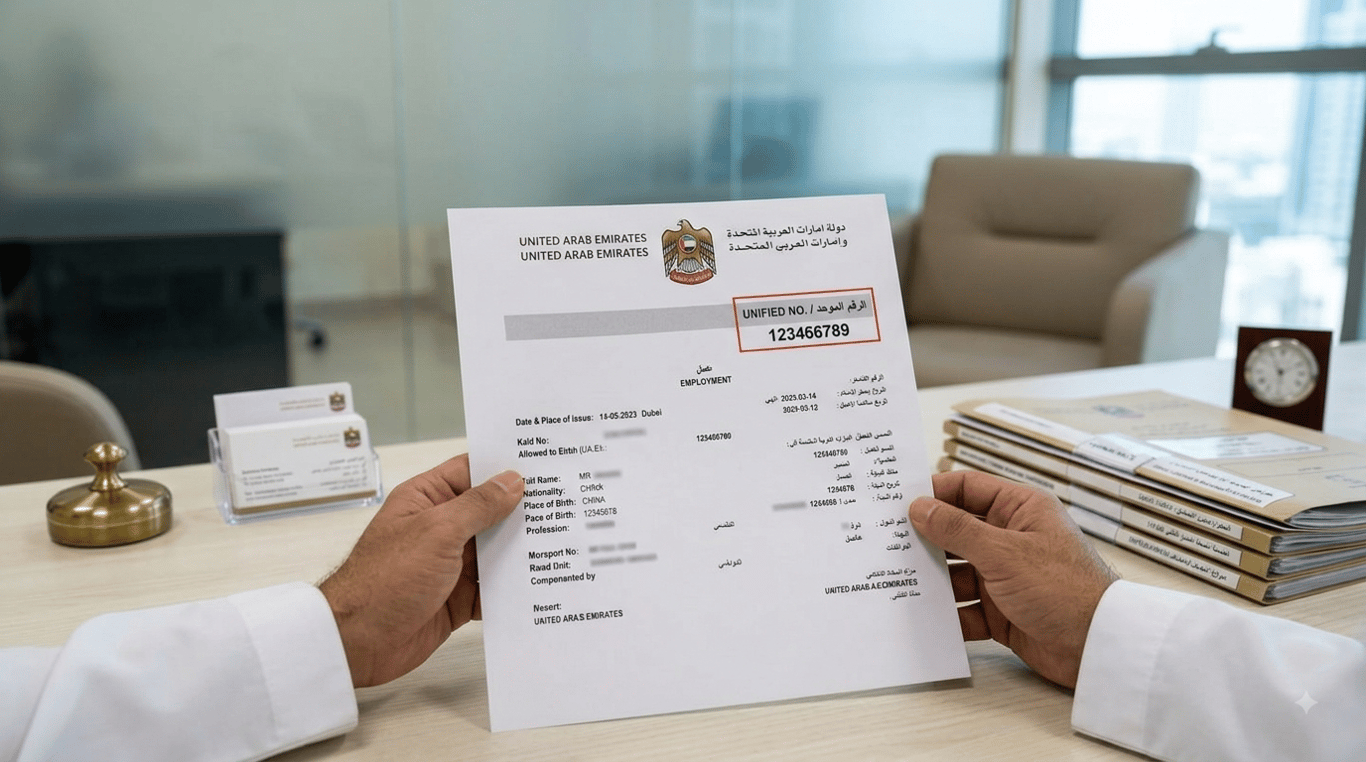
What Is the Unified Number (UID)?
Unified Number, commonly referred to as the UID (Unified Identification Number), is a 9 to 15-digit unique identifier. It is assigned to you completely automatically the moment you enter the country and are issued a residence visa or tourist entry permit.
This ID number is not shareable. It is exclusively assigned to you and connected to your official documents. Even if you leave the UAE and come back after 10 years, the system will automatically recognize you and reassign you the exact same UID.
Here is the common structure of the UAE UID number.
|
Section |
Representation |
Example / Code |
|
First 3 digits |
The Emirate code where your visa was issued. |
Abu Dhabi: 101 Dubai: 201 Sharjah: 301 Ajman: 401 |
|
Next 4 digits |
The year your number was issued. |
2021, 2023, 2024, etc. |
|
Final 7–9 digits |
Your specific visa tracking number. |
Unique identifier digits. |
The General Directorate of Residency and Foreigners Affairs (GDRFA) and the Federal Authority for Identity, Citizenship, Customs & Port Security manage the whole system.
Why Is Your UID Important?
But why is this UID number important? This number is a legal identity as it connects every aspect of your life in the UAE.
For Government Services
-
Visa and Unified Number applications: Any upgrade, renewal, or cancellation requires it.
-
Emirates ID processing: Your Emirates ID is tied directly to your UID.
-
Medical insurance registration: Health authorities use it to mandate and track coverage.
-
Labor contract applications: The Ministry of Human Resources and Emiratisation (MOHRE) uses this number to link your employment rights.
For Business Operations
-
Setting up a company: Whether in a Free Zone or Mainland, shareholders need their UID validated.
-
Trade license applications: You cannot be a registered general manager without one.
-
Bank account opening: Central bank regulations require this number for KYC (Know Your Customer) compliance.
For Daily Life
-
Service-provider verification: Setting up home Wi-Fi with Etisalat or Du, DEWA (water and electricity) sorted, or even registering a car.
-
Cross-department record tracking: If you get a traffic fine, it gets logged against your traffic file, which is linked back to your main identity.
-
Official document renewals: For official document renewals, you need this number.
Unified Number vs Emirates ID vs Visa Number
People mix these three up all the time. They're not the same thing, and knowing the difference saves you real headaches. Here's a simple comparison.
|
Feature |
Unified Number (UID) |
Emirates ID |
Visa / File Number |
|
What it is |
Your permanent immigration file number |
A physical ID card with a 15-digit number |
The number tied to your current visa |
|
Validity |
Permanent, never changes |
Expires with your visa, needs renewal |
Changes with each new visa |
|
Official Source |
ICP and GDRFA immigration systems |
On the card and in the system |
On your visa page |
|
Digits |
Usually 9 to 15 |
Always 15 |
Varies |
|
Changes if you switch jobs? |
No |
Reissued |
Yes, new visa |
The big takeaway: your unified number UAE & Emirates ID are connected to each other, but they are two different numbers. The unified number stays the same for life. The Emirates ID number belongs to a card that expires.
How to Obtain Your UID
You never fill in a form to "get" a unified number. It happens on its own. Here's the usual flow.
-
You enter the UAE: The unified number is generated automatically at the airport, seaport, or land border when your entry record is created.
-
Your visa is processed: After your medical tests and Emirates ID application, the UID gets linked to all your documents.
-
Your visa is stamped or issued: Once your residence visa is active, the unified number UAE passport entry shows up on the visa page or e-visa copy.
-
You receive your Emirates ID: By this point, your UID is already tied to your identity record across the system.
Documents Required for UID Registration
You don’t need any special documents to “register” a unified number, because there’s no separate registration. But you should keep a folder of these documents for emergencies:
-
Valid Passport
-
Entry Visa or entry permit documentation
-
Medical test results
-
Emirates ID application form
-
Sponsor Documents
Where to Use Your UID
Now, look at the day-to-day scenarios where this UAE UID becomes very important.
Government Services
If you are applying for a Golden Visa, renewing a standard residency, managing family sponsorship, registering for health insurance or dealing with labor contracts, you need this ID.
Business Services
Entrepreneurs need their UID for initial company name approvals, trade license insurance, and dealing with the Chamber of Commerce. Banks need this mortgage approval, and insurance companies ask for this to verify residency during insurance claims.
Online Services
To access the GDRFA portal or UAE PASS app or track a government application status, you need your UID.
Unified Number for Residents vs Visitors
It is another misconception that only residents have a UID. This is not true. Both residents and visitors get a UID. But the purpose is different.
For Residents
If you hold a residence visa, your UID is permanent. It stays the same for the rest of your life. It is linked to your Emirates ID. You need it every time you want to access government services and set up your own business.
For Visitors
Tourists and short-term visitors also get a UID when they arrive. However, it is a temporary-stay UID. It is mainly used by immigration authorities for entry and exit tracking to confirm overstays. If a tourist decides to apply for a visa extension, the travel agency will use this temporary UID to process the extra days.
How to Check Your Unified Number in the UAE
There are multiple methods to check your Unified Number in the UAE.
Method 1: GDRFA (for Dubai)
If your visa is linked to Dubai, use the GDRFA unified number inquiry service. This is the fastest way to check unified number details for a Dubai file.
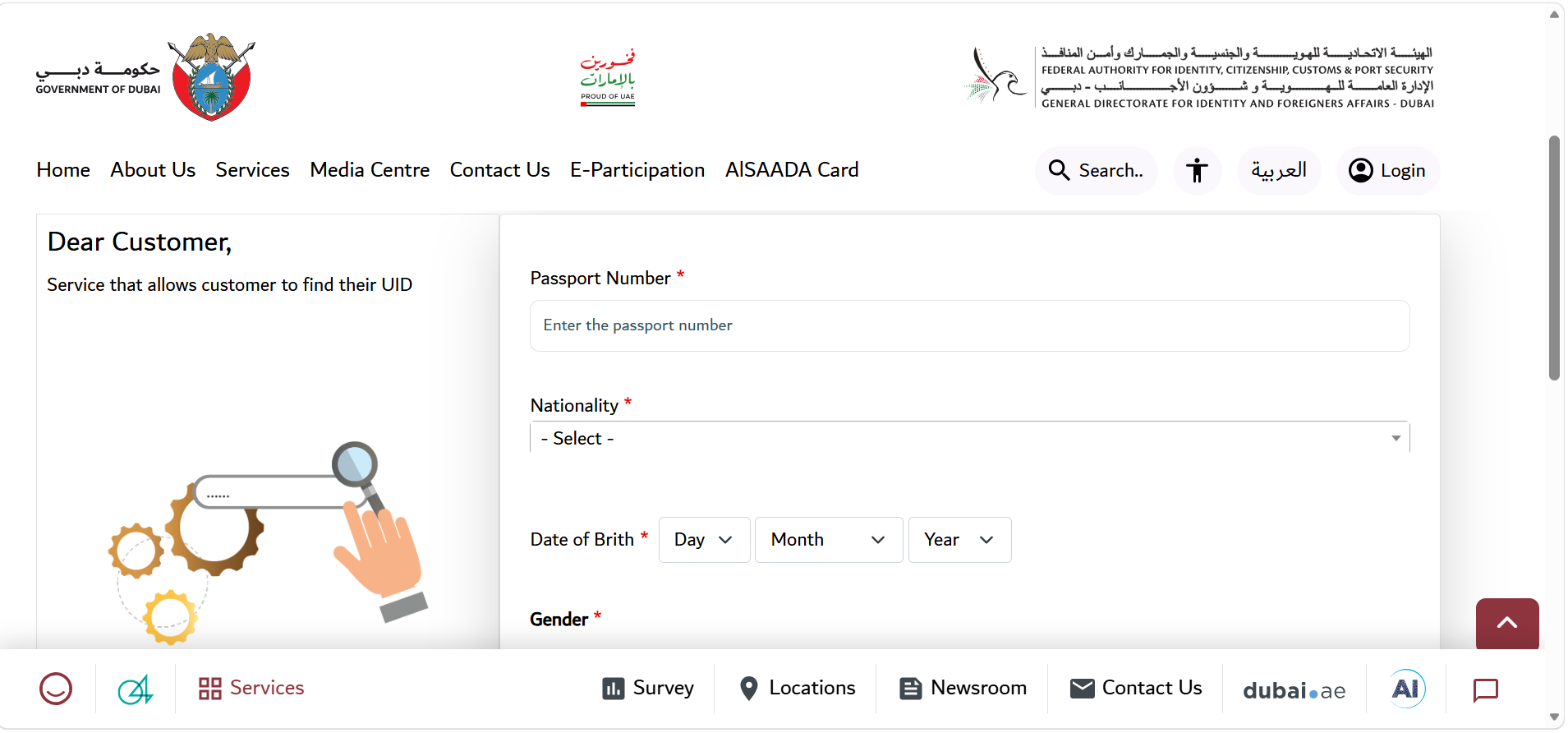
-
Visit gdrfad.gov.ae
-
Open the "Unified Number Inquiry Service"
-
Enter your passport number
-
Select your nationality
-
Add your date of birth and gender
-
Complete the security verification and click submit
Your unified number appears right away. It's a self-service inquiry, so you don't need an account.
Method 2: ICP (for all emirates)
If your visa is from Abu Dhabi, Sharjah, Ajman, Ras Al Khaimah, Fujairah, or Umm Al Quwain, use the ICP unified number service. This is the go-to for the unified number UAE ICP route.
The process is the same. It pulls up your details, and your UID appears on screen. Because ICP and GDRFA are linked, the number should match on both systems.
Alternative ways to find it
Check these steps also to find UID:
-
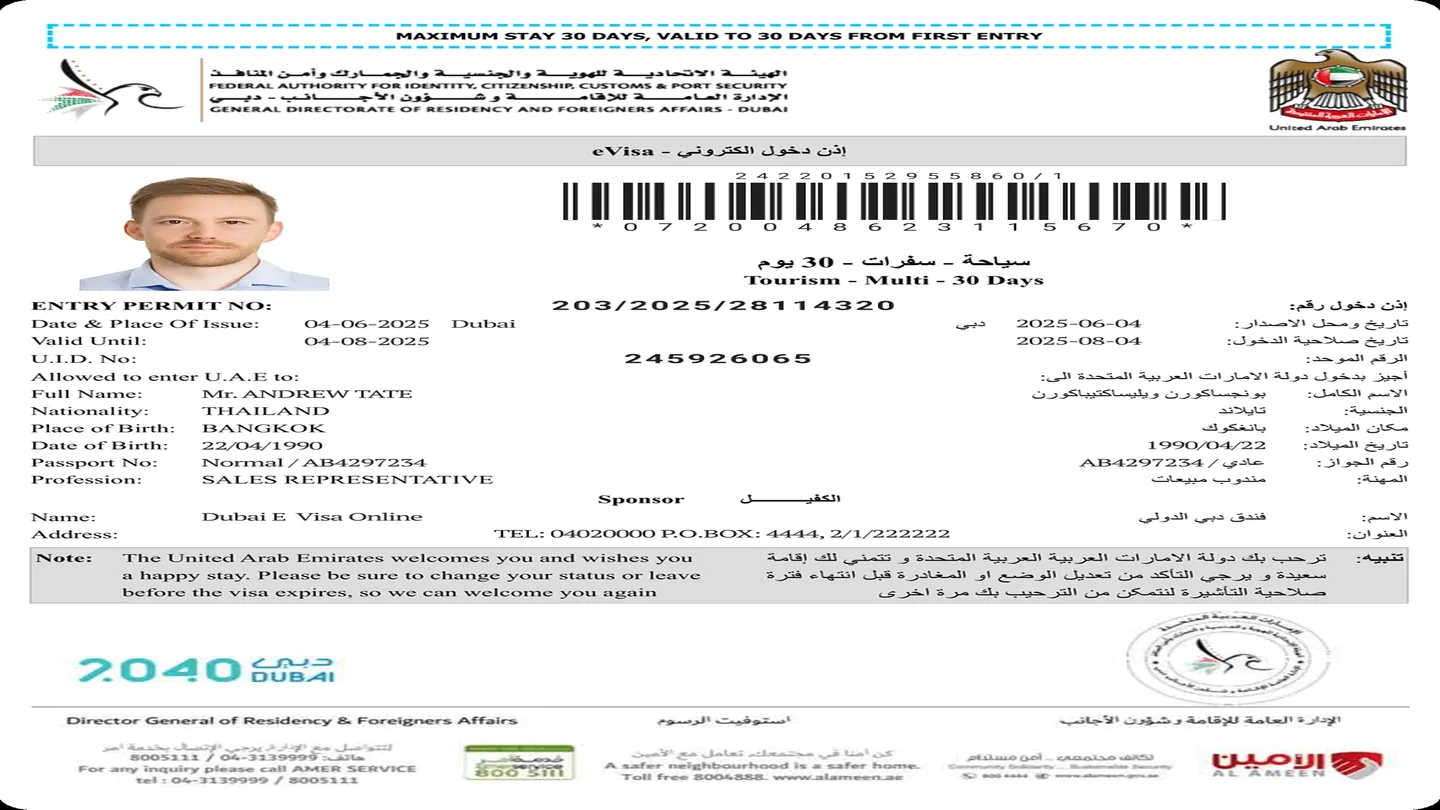
Check your visa: The unified number is usually printed above your file number on the residence visa or entry permit. On an e-visa, look near the top, and you find "Unified No." or "UID."
-
Check your Emirates ID record. The UID is connected to your Emirates ID in the system. Note that the ID is not printed on the card, so the online inquiry is more reliable.
-
Call GDRFA: Dial 8005111 (toll-free inside the UAE) or +971 4 313 9999 from abroad.
-
Visit in person: Amer centres and GDRFA customer happiness centres in Dubai can help, and ICP service points cover other emirates.
Conclusion
Your unified number unlocks smooth government services, faster business setup, and hassle-free daily admin across the UAE. Once you understand what it is, how to check it and where to use it, make your daily life in the UAE easy.