
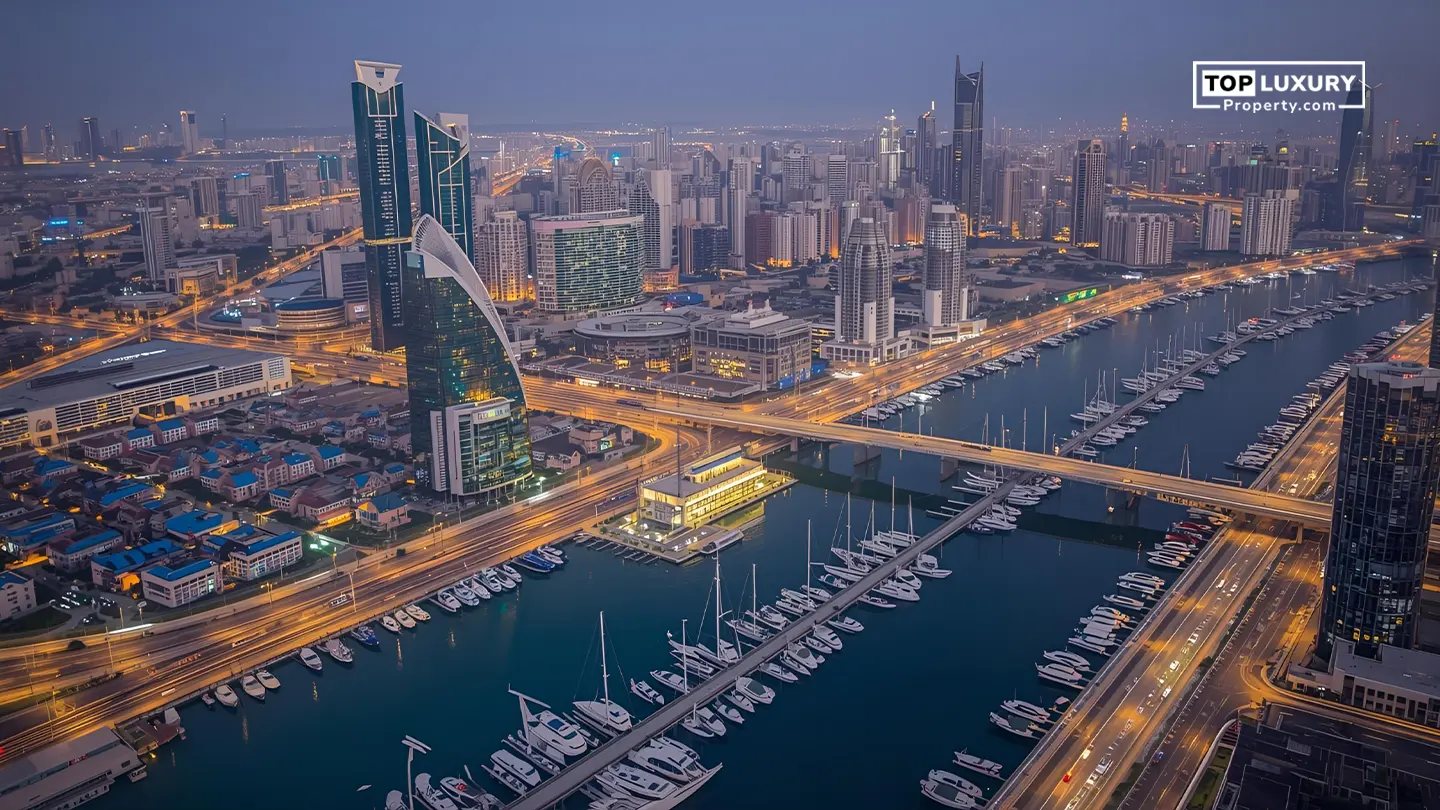
For many Turkish investors, buying property in Dubai is a great way to safeguard their wealth against the falling lira. It’s easy to see why: you can earn good rent with no taxes, your investment is stable (tied to the US dollar), and you can even get a Golden Visa for your family.
But before you buy that dream apartment, there is some important legal and monetary paperwork. Where are you allowed to buy? What is a ‘No-Objection Certificate’? How do you get a loan as an expat?
Don’t let these questions stop you. This is your simple, easy-to-follow checklist. It will help you make sure your Dubai property purchase is safe, smart, and all rules are followed.
Legal Ownership Rights for Turkish Citizens in Dubai
As a Turkish investor, you can own property in Dubai without restrictions. The Dubai government allows Turkish investors to invest in Dubai property markets, and you can buy freehold properties in designated zones. These freehold areas contain some of Dubai’s most exclusive locations including Palm Jumeirah, Dubai Marina, Downtown Dubai and Business Bay.
With freehold ownership, you own the property which means you have full access to sell, lease or transfer without restriction. This is different from leasehold, where you get usage rights for a period. Dubai Land Department handles all property transactions and protects your ownership rights under UAE law. If you are buying property in Dubai over a certain amount, you can get residency visas to live and work in Dubai.
Essential Due Diligence and Documentation Checklist
Start your legal checklist before buying Dubai real estate property with the right documentation. Understanding what each document is for facilitates a smooth transaction.
1.Personal Documentation Requirements
First, you need a valid passport with validity of at least six months beyond your planned purchase date. For visits to Dubai and to see properties you need a residence visa or entry permit. Get an UAE bank account early because most transactions require local bank transfers. A UAE tax number is also required for registration.
2.Property-Specific Documents
MOU, this is your first purchase agreement. This document lists the property details, sale price, payment schedule, and completion timeline. Read this carefully before signing. A No Objection Certificate (NOC) from the developer or current owner indicates that the property is also required.
3.Verification and Inspection Steps
Get a property valuation from an approved company to confirm the market value matches your purchase price. Verify the property’s title deed at the Dubai Land Department. Check for outstanding service charges, maintenance charges or legal issues. Choose an experienced real estate agent who has helped Turkish investors navigate the system. They can assist with translations, document preparation, and liaising with government departments.
Ensure that you visit the property in person before you close the deal. Check the track record and completion timeline for off-plan properties. Verify that all amenities and specifications are as described in the sales material.
Financial Costs & Budgeting Breakdown
The full cost structure helps you budget for your Dubai real estate investment. Here are total fees and charges you need to pay while buying a property in Dubai:
| Fee Type | Amount / Percentage |
|---|---|
| DLD Registration Fee | 4% of purchase price + AED 580 admin fee |
| Mortgage Registration Fee | 0.25% of loan amount + AED 290 admin fee |
| Property Valuation Fee | AED 2,500–3,500 |
| Bank Processing Fee | 0.5–1% of loan amount |
| Trustee Fee | AED 4,000 (AED 5,000 for off-plan) |
| Agency Fee | 2% of purchase price |
| NOC Fee | AED 500–5,000 (varies by developer) |
Ongoing Property Costs
If you buy an Apartment in Dubai you need to pay maintenance service charges, which range from AED 10 to AED 25 per square foot annually. Villa communities may have low price, but maintaining lawns and pools requires extra costs in budgets. Utility connection deposits and initial setup costs add up to AED 2,000 to AED 4,000.
For instance, on a budget of AED 1,000,000, you need to prepare AED 40,000 to AED 60,000 for all fees and charges. Save an additional 3% to 5% for unexpected costs.
Implications for taxation and financing
Understanding taxes and mortgages maximizes your investment return without increasing cost.
1.Tax Benefits for Turkish Investors
Many property investors get huge tax advantages in Dubai. There is no property tax, no capital gains tax and no income tax on rental income. This means you keep 100% of rental returns after expenses. No inheritance or estate tax makes Dubai attractive for long-term wealth planning.
Only the municipal housing fee of 5% of your annual rent is charged annually. Owner-occupied properties pay 2.5% of the estimated rental value. This fee is small compared to property taxes in other global cities.
2.Mortgage Accessibility and Terms
You can get mortgage financing through UAE banks as a Turkish citizen. Banks usually lend up to 75% on properties under AED 5 million. For properties above AED 5 million, the maximum financing is 65%. The ratios may be a little lower for non-resident buyers - perhaps 60% to 70%.
Non-resident mortgage rates range from 3.5% to 5.5% annually. Fixed-rate periods of 1 to 5 years are typical, with variable rates after that. Mortgage terms are up to 25 years, though some banks cap non-resident terms at 15 or 20 years.
3.Mortgage Requirements and Costs
Minimum monthly income thresholds for banks are AED 15,000 to AED 25,000 a month. They need salary certificates, bank statements for six months, passport copies and visa documents. Self-employed individuals must submit audited financial statements and trade licenses.
The mortgage registration fee is 0.25% of the loan amount plus AED 290 for the land department. Life insurance is mandatory and needs about 0.5% to 1% of the loan value annually. Typical early settlement penalties vary by bank, but they are between 1% and 2% of the outstanding balance.
Visa and Residency Pathways via Property Investment
UAE Golden Visa allows you a residency option when you buy property in Dubai. Based on investment value, property owners can get 2-year or 10-year residence permits. Buy a property worth AED 750,000 for a 2-year Golden Visa. AED 2,000,000 is required for the 10-year Golden Visa.
Golden Visa holders have many benefits beyond residency. You can work in the UAE without employer sponsorship. Your spouse & children get the same visa benefits so your family can live, study and work in Dubai. It is good for extended stays outside the UAE - unlike standard residence visas.
If you are a Golden Visa applicant, then you need to prove financial stability through bank statements, salary certificates, or business income documentation. A clean criminal record and valid health insurance are mandatory.
Once you submit all documentation, application processing takes 2 to 4 weeks. Fees include AED 2,750 for the residence permit, AED 500 for the Emirates ID and medical examination costs of about AED 500. Family members pay similar fees for individual visas.
All off-plan properties above the mentioned amount are eligible for the Golden Visa when construction is complete and title deeds are transferred. Multiple properties with a minimum threshold can qualify together. Both freehold and certain leasehold properties qualify, subject to value requirements.
Let’s recap the legal checklist before buying Dubai real estate property
- Verify property ownership through the Dubai Land Department
- Obtain a registered title deed
- Work only with RERA-licensed real estate agents
- Prepare required documents:
- Passport
- Emirates ID
- Sales Contract (Form F/MOU)
- No Objection Certificate (NOC)
- Proof of Payment
- Original Title Deed
- Verification Documentation
- Power of Attorney (for remote transactions)
- Other documents (if funds sourced through a mortgage)
- Open a Dubai bank account for transactions
- Confirm the property is in a freehold zone
- Understand transfer fees and taxes:
- Dubai Land Department transfer fee: 4%
- Agent commission: 2–5%
- Registration fee: up to AED 5,000
- No income, capital gains, or yearly property tax
- Apply for investor visa (if eligible)
- AED 750,000 investment: 2-year visa
- AED 2 million investment: 10-year visa
- Conduct due diligence on developer’s reputation
- Stay updated on market trends and property values
- Review payment plans and installment options
- Complete title deed transfer at Dubai Land Department
In short, Turkish investors find the Dubai property markets welcoming, transparent and profitable. The freehold ownership rights, zero property taxes, and Golden Visa opportunities make this an attractive investment proposition. Follow this legal checklist to secure documentation and understanding of financing for a successful Dubai real estate investment.