The Investment Question You’re Actually Asking
When considering real estate investment opportunities, choosing between Dubai and Istanbul is an important decision. Dubai offers stability, low taxes and a predictable market. Istanbul offers lower prices, higher rental returns and the chance to get citizenship through investment. The question is not which city is better overall, but which one works better for your specific situation, your available money, and how much risk you are comfortable with.
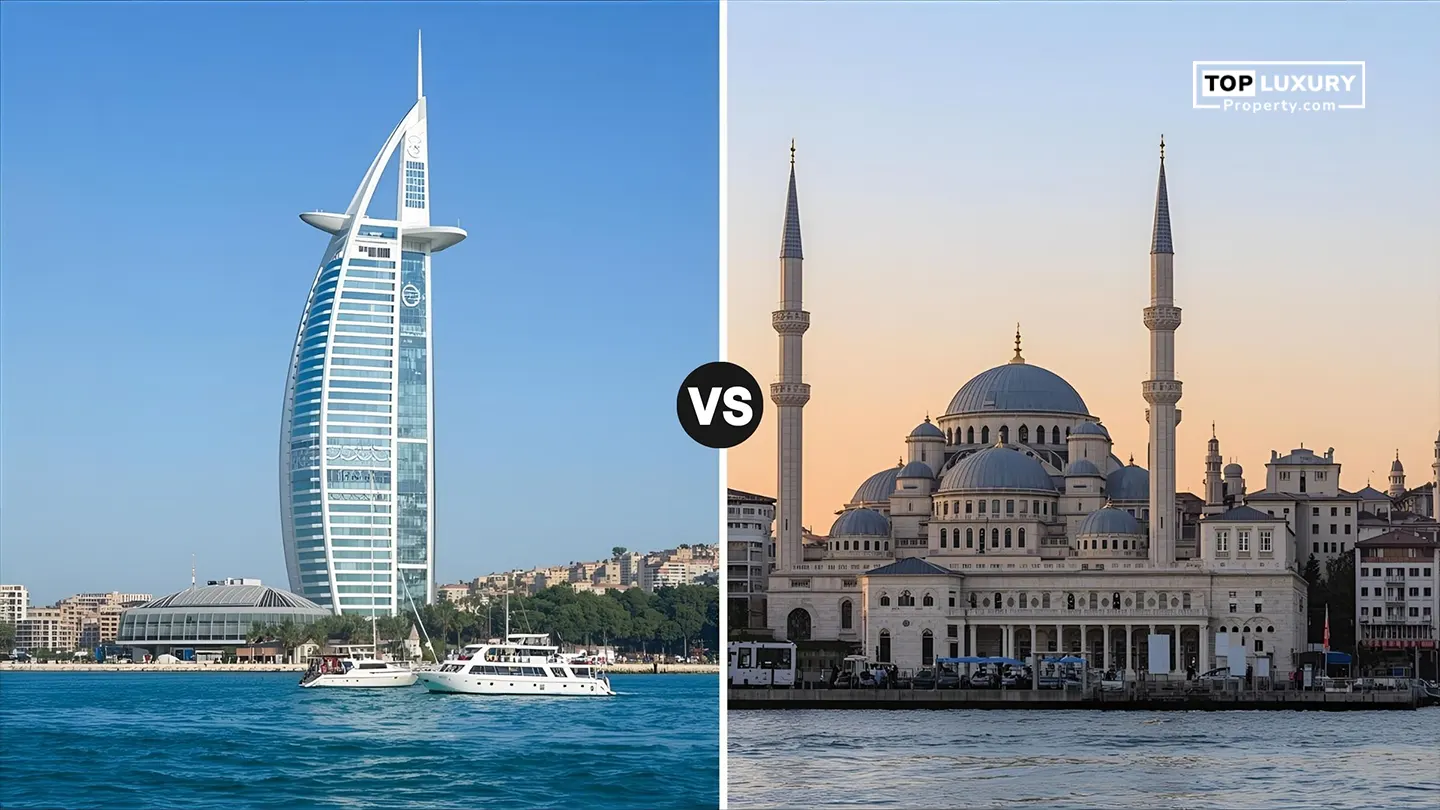
Understanding the choice between Dubai vs Istanbul Real Estate ROI means looking at two different investment approaches. Dubai is the steady and reliable choice; it produces consistent income without surprises. Istanbul is the growth choice, offering higher returns but with more ups and downs. This guide will give you the real numbers, show you hidden costs, and provide the facts you need to make a smart decision. Let’s look at where your dirham actually goes further.
Entry Price and Property Value (Dirham Value)
Cost per Square Meter: Where is Property More Affordable?
The first question investors ask is: How much money do I need to buy property?
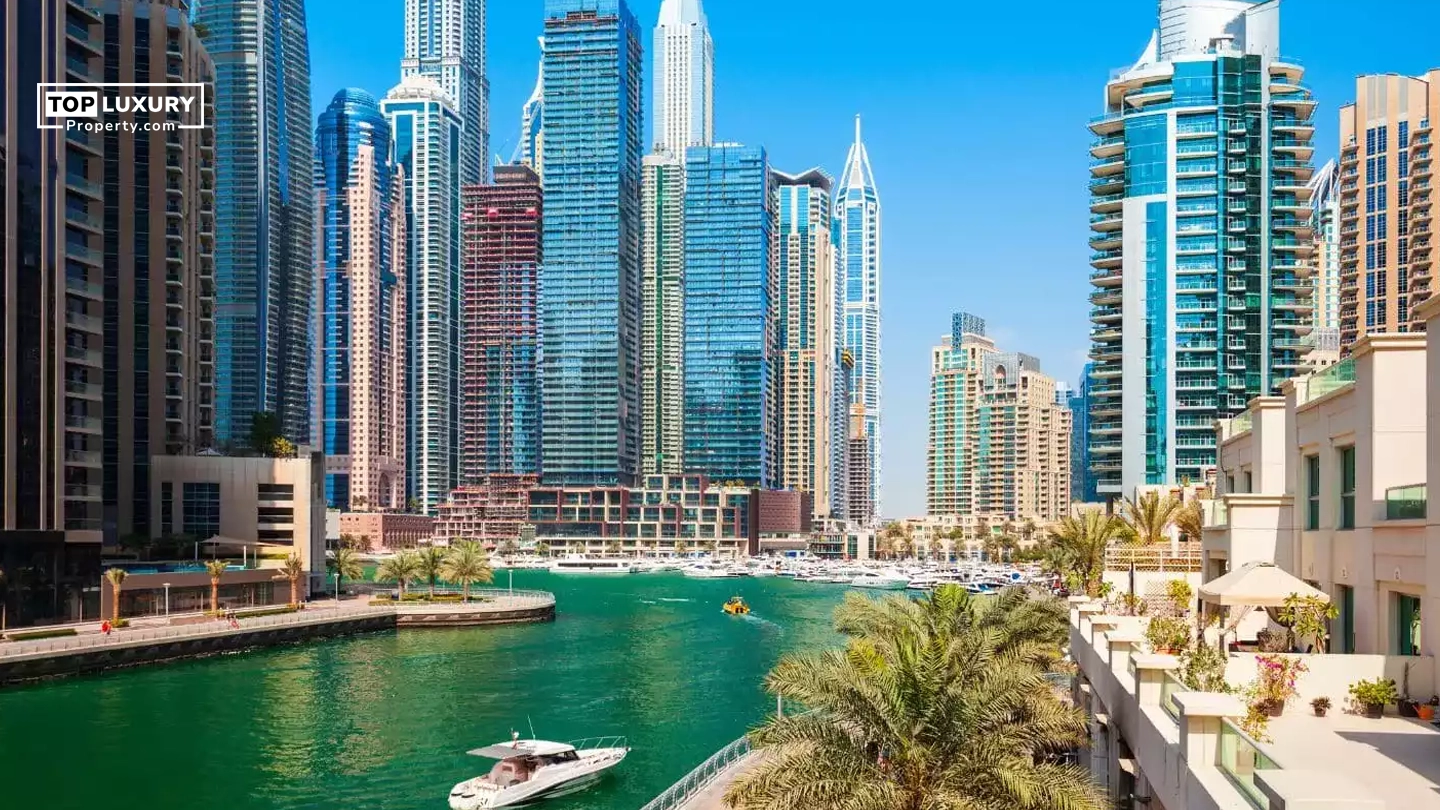
In Dubai, apartment prices are currently around AED 15,000–20,700 per square meter in 2025. If you want property in popular areas like Downtown Dubai or Dubai Marina, prices are AED 20,000–26,000 per square meter. But if you choose carefully, newer areas like Jumeirah Village Circle (JVC) cost only AED 10,000–14,000 per square meter, much more affordable.
Istanbul has a different price structure. Right now, average apartment prices are about 55,500 Turkish Lira per square meter, which equals roughly $1,520 USD or around 13,200 AED. But this average number hides big differences. Luxury neighborhoods like Nişantaşı cost $5,000–7,000 per square meter, while newer areas like Esenyurt and Beylikdüzü are much lower at $800–1,200 per square meter.
Here’s the important point: You get much more space for the same amount of dirhams in Istanbul’s new areas compared to Dubai’s middle-class neighborhoods. A typical 2 bedroom apartment in Dubai Marina costs about AED 1.8–1.9 million. The same apartment in Istanbul’s main areas would cost $200,000–400,000 USD (around AED 735,000–1.47 million), and it’s usually brand new.
The problem? That lower price in Istanbul comes with more risk and money problems. When comparing Cost per square meter Dubai vs Istanbul, Istanbul is much affordable upfront, but Dubai’s prices are more stable and real when you account for inflation.
Financial Returns: Rental Yields vs. Capital Growth
Now let’s talk about the returns you make from your investment. Understanding Rental Yields Dubai vs Istanbul helps you know what income to expect each year.
Rental Yields Showdown: Dubai’s Stability vs Istanbul’s Higher Nominal Returns
Dubai’s rental market is easy to understand. The average rental return in Dubai is 5.97% per year in 2025. If you pick the right location, you can earn more: Dubai Silicon Oasis gives 9.29% per year, Jumeirah Village Circle gives 8.64%, and Al Furjan gives 7.54%. Studio apartments usually give even better returns, often more than 8%. These numbers are before you pay for building maintenance and fees.
Istanbul looks better at first. Turkey’s average rental return is 7.41% as of Q1 2025, with Istanbul at 7.30%. Sounds better than Dubai, right? Here’s the catch: Istanbul charges high taxes. You pay 15–40% in taxes on your rental income (depending on how much you earn), plus maintenance costs. After paying taxes and maintenance, your real return drops to only 4–6%. This is actually lower than Dubai’s returns, even though Istanbul’s starting number looks higher.
Let me show you with actual numbers. Say you buy property in Istanbul that rents for 30,000 Turkish Lira per month ($780 USD) and costs 4 million Turkish Lira. The basic calculation shows 9% return. But after taxes and maintenance costs? Your real return becomes about 5–6%, basically the same as Dubai. You did extra work to get the same money.
When deciding about where to invest in real estate Dubai or Istanbul, remember that the returns you actually make from your property. Dubai’s tax-free returns are higher than Istanbul flashy returns.
Analyzing Capital Appreciation: Stability in AED vs Growth in Turkish Lira
Now let’s talk about your property going up in value over time. Capital Appreciation in Dubai has been very good historically.
Dubai has shown strong and steady growth. Over the past five years, properties went up 7–10% per year, with premium areas going up 12–15% per year. Here’s a big example: from 2019 to early 2025, prices went from AED 832 per square foot to AED 1,524 per square foot, that’s an 83% increase over about six years. Villas did even better, going up 29% per year, with some rising 41% in a single year. Here is the capital appreciation of Dubai communities over the year.
| Area | Median price per sqft. | YoY % | vs. 2014 % |
|---|---|---|---|
| Palm Jumeirah | 5,315 | -2% | +156% |
| Downtown Dubai | 3,867 | +34% | +80% |
| Business Bay | 2,684 | +7% | +14% |
| Dubai Islands | 2,666 | +24% | +0% |
| Dubai Creek Harbour | 2,649 | +12% | +0% |
| Dubai Hills Estate | 2,520 | +10% | +99% |
| Jumeirah Village Circle (JVC) | 1,575 | +17% | +8% |
Istanbul’s numbers look amazing on paper. Prices jumped 12–15% compared to 2024. But there’s a big problem many people miss. When you adjust for Turkey’s very high inflation, the real picture is very different. Properties showed nominal growth of about 30% from 2024 to mid-2025, but when you account for Turkey’s high inflation rates, real property prices actually went down by about 8.8%.
Think about that carefully: Your property deed shows a higher number in Turkish Lira, but that money can buy less than before. It’s like getting a 10% raise when prices go up 25%, you actually lost money.
Dubai’s property gains stay real because the dirham stays stable against the US dollar. Istanbul’s gains in Turkish Lira are constantly decreasing due to inflation. Dubai vs Turkey Property Investment shows that Dubai gives you good capital growth, while Istanbul often gives you lower growth when you look at inflation.
The Currency Factor and Market Stability
The difference between nominal and real returns becomes crystal clear when examining currency dynamics and economic fundamentals.
Risk vs Reward: The Impact of Turkish Lira Volatility vs AED Stability
In 2024, the Turkish lira depreciated against the dirham. From 0.1242 AED per Turkish Lira on January 1, 2024, to 0.1039 AED on December 31, 2024, the TRY to AED exchange rate declined by 16.41%. This means if you invested USD 400,000 converted to Turkish Lira in January 2024, by December, you’d have lost 16.41% of your investment compared to AED even after property appreciation.
The lira has settled somewhat in 2025 at around 10.36 TRY per AED in April 2025 (monthly variations), but the fundamental volatility remains. An investor with Turkish property is exposed to currency translation risk: Lira appreciation can be partially or fully offset by lira depreciation against the dirham or other hard currencies.
Conversely, the AED is pegged at 3.6725 US dollars to the dollar. So, dirham holders or US dollar investors can now invest in Dubai property without currency risk. Your property appreciation is untouchable in AED and USD terms.
Economic Stability and Transparency: Dubai’s Tax-Free Advantage
Let’s talk about the bigger economic picture. Understanding Property Tax Dubai vs Turkey also includes understanding the economic environment.
Dubai has a transparent, established regulatory framework. Clear property records, transparent pricing and fast title transfers are maintained by the Dubai Land Department. Its broader economy is based on oil revenues, various financial services, and its position as a global center for commerce and tourism. They all contribute to macroeconomic stability with moderate inflation and strong institutional frameworks.
Turkey has a difficult economy. Inflation climbed above 65% in 2023 but has moderated to about 32.87% in October 2025 - a multiple of Dubai’s moderate inflation. The government has introduced fiscal reforms to stabilise the lira and curb inflation but underlying volatility worries long-term investors. The dynamic Turkish real estate market reflects increased market uncertainty and policy risk.
Tax-wise, Dubai has no competition: no property tax on residential properties, no capital gains tax & no inheritance tax! UAE home buyers and sellers pay only transaction fees (4% transfer fee at purchase, 2% brokerage commission) and annual service charges per property size. In contrast, Turkey introduced property tax reforms in 2025 which raised taxes. Annual property taxes for residential properties in metropolitan areas are now 0.2%, calculated on market value instead of municipal values. Rental income also is taxed at 15% to 40% depending on income bracket. This is why Property Tax Dubai vs Turkey strongly favors Dubai as a place to invest.
Legal and Residency Incentives
When you buy property, you sometimes get more than just a place that makes money. You might get legal benefits too.
Citizenship by Investment: Turkey’s Fast Track to a Second Passport
Turkey offers among the world’s most accessible citizenship-by-investment programs. Investors can obtain Turkish citizenship by purchasing property worth at least USD 400,000 USD for three years. The entire process takes 6-8 months from application submission to passport issuing - and investors can keep their original nationality when obtaining Turkish citizenship. It is a family path that covers spouses and dependent children under 18 years old.
The program is accessible. More than one property can be combined to reach the $400,000 threshold, residential or commercial properties are eligible, and citizenship path does not require renunciation from most source countries. For some investors, who want geopolitical diversification or access to Turkish residency benefits, this adds substantial value above ROI calculations. Having a Turkish passport gives you visa-free or visa-on-arrival access to around 116 countries - great for business - and the freedom to own property elsewhere in Turkey without the restrictions that apply to foreigners generally.
Residency Benefits: Dubai’s Golden Visa Program
The Golden Visa program targets wealthy investors and professionals looking for long-term residency in the UAE. For property investors owning property worth AED 2 million or more can automatically qualify for a 10-year residency visa. It has a higher investment requirement than Turkey’s citizenship pathway and gives residency rather than citizenship - you keep your original nationality and cannot get UAE citizenship through property investment.
But the Golden Visa has its advantages. Dubai in particular offers a world class standard of living, low crime, good education and healthcare systems and a cosmopolitan environment. You can stay in the UAE for life (with renewal every 10 years) without local employment sponsorship. Family members can also be included, and residency does not require spending a particular amount of time physically in the UAE annually. For affluent investors who want security and access to a top lifestyle destination, the Golden Visa is more than property returns - it’s value beyond investment returns. UAE residency also entitles you to world class banking, investment and legal services, making it an ideal location to manage wealth in multiple jurisdictions.
Comparison Table: Dubai vs Istanbul Investment Metrics
| Metric | Dubai | Istanbul |
|---|---|---|
| Average Price Per Square Meter | AED 15,000–20,700 ($4,100–5,650 USD) | $1,318 USD (~13,200 AED); ranges $800–5,000 by area |
| Gross Rental Return | 5.97% average; 7–9% in best areas | 7.30% overall; 5–7% in main areas, 8–12% in new areas |
| Real Rental Return (After Taxes) | 5–7% after building fees | 4–6% after taxes and maintenance |
| Yearly Property Value Growth | 7–10% average; 12–15% in premium areas | 12–15% on paper; actually -8.8% after inflation adjustment |
| Yearly Property Tax | Zero (0%) | 0.2% in city areas |
| Tax on Rental Income | Zero (0%) | 15–40% based on income level |
| Tax When You Sell | Zero (0%) | 0% for personal property; yes for companies |
| Buying Fees | 4% transfer fee | 4% plus 1–18% VAT (VAT waived for first-time foreign buyers) |
| Currency Strength | Dirham pegged to US Dollar; very stable | Turkish Lira volatile (dropped 16.41% vs Dirham in 2024) |
| Second Passport or Visa | 10-year visa (minimum AED 2M investment) | Full citizenship (minimum $400,000; hold 3 years) |
| Inflation Rate (2025) | 3–4% (normal and healthy) | 32.87% (October 2025); was 65% in 2023 |
| Government System | Very clear rules, honest systems, well organized | Systems improving; still some uncertainty |
Conclusion: Which City Wins Your Investment?
Choose Dubai if you want safety and steady money. If you like predictable returns, don’t want tax surprises, and want to protect your money from currency problems, Dubai is the right choice. Your yearly return might be 5–6% instead of Istanbul’s 7–9%, but that investment is guaranteed in dirhams, zero tax, and backed by clear rules and excellent systems. When you invest a dirham in Dubai real estate, you get steady, tax-free returns every year and good capital growth.
Choose Istanbul if you want growth and don’t mind taking risks. If you believe new markets give bigger gains over time and can handle the Turkish Lira going up and down, Istanbul gives exciting numbers. The $400,000 citizenship option is unmatched anywhere in the world. If you plan to hold property for 5–10 years or longer and can handle lira volatility, Istanbul’s affordable prices and high returns make sense. Just be honest with yourself: real growth (after inflation) has been negative, taxes reduce your earnings, and you face currency risk and Turkish government changes.
For most people looking for a good ROI, Dubai is the smarter choice. But where to invest in real estate, Dubai or Istanbul, depends on your personality and goals, but Dubai gives you more safety and real returns.